
WELCOME BONUS 300%
UP TO €1100 + 300
FREE SPINS
UP TO €1100 + 300
FREE SPINS
Home → Blackjack
Blackjack at Stupid Casino: Variants, Rules and Payouts
Place Side Bet before cards are dealt
Side bets allow players to wager on outcomes separate from the main hand. In games like Infinite Blackjack by Evolution, four side bets are available: Any Pair, 21+3, Hot 3, and Bust It. These wagers are placed before the cards are dealt, adding an extra layer of potential action. Some side bets, like Bust It, can offer payouts based on the dealer busting with a specific number of cards.
The Insurance side bet, offered in games with 6-8 decks, presents a distinct risk profile. It allows a player to bet up to 50% of their main wager if the dealer shows an Ace. While it pays 2:1, the house edge for this specific bet is a substantial 7.47%, drastically reducing the overall return to player. Basic strategy dictates always declining this bet unless card counting indicates a significant advantage.
Understanding the RTP of these optional wagers is crucial for beginners. For instance, the Insurance bet has a low RTP of 92.53%. In contrast, the main game of Blackjack Ein Deck with classic rules offers a significantly higher RTP of 99.85%. Beginners should focus on the core game mechanics before exploring side bets, especially those with a higher house edge.
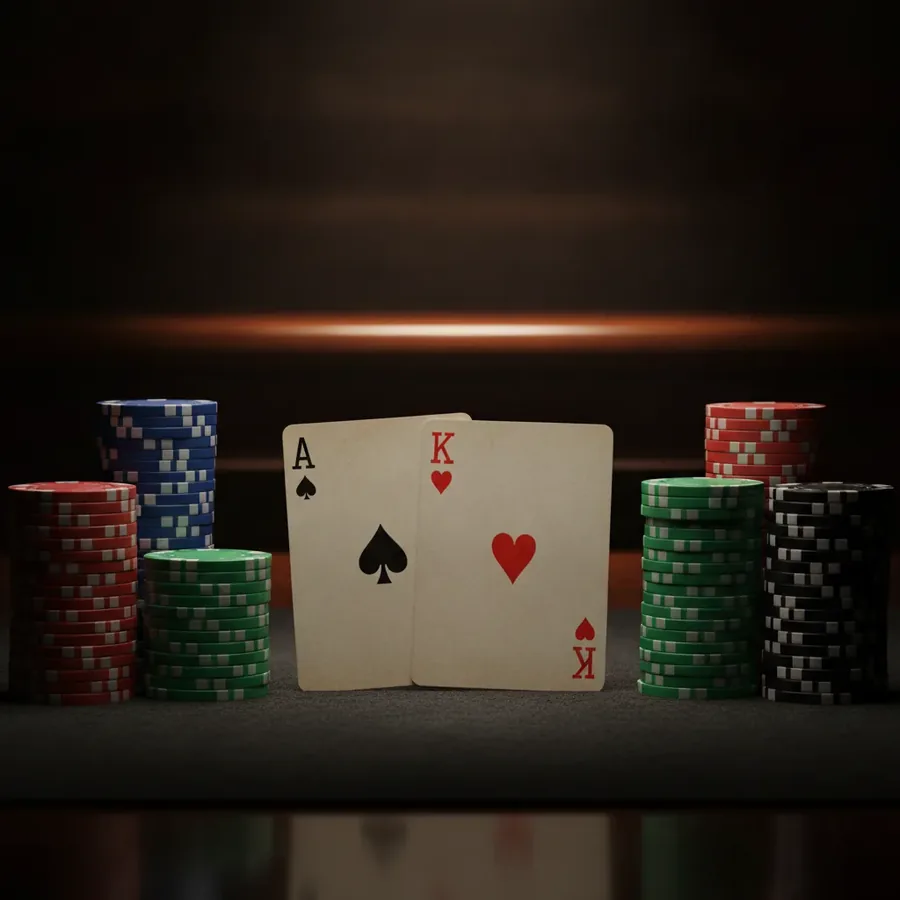
Blackjack Payout 3:2 Explained in Detail
The payout for achieving a blackjack (an Ace and a 10-value card) is a fundamental aspect of the game. A 3:2 payout means that for every €2 wagered, a player wins €3. For a €10 bet, this results in a €15 payout. This is a standard and favourable payout structure for players, contributing to a lower house edge.
Comparing payout structures highlights the impact on the casino's advantage. Blackjack Auszahlung 6:5 reduces the payout for a blackjack to €12 on a €10 bet, increasing the house edge by 1.39 percentage points. The Blackjack Ein Deck variant specifically states a 3:2 payout, which is a key factor in its impressive 99.85% RTP.
The Blackjack Liberal Vegas Strip variant, known for its favourable rules, also offers a 3:2 payout for blackjacks. This, combined with other player-friendly rules like Dealer Stands on Soft 17 (S17) and Double After Split (DAS), contributes to its superior RTP of 99.72%. Beginners should actively seek tables that offer the 3:2 payout.
Mobile version needs 1 Mbit bandwidth
Playing live casino games on a mobile device requires a stable internet connection to ensure a smooth experience. Evolution's Lightning Blackjack, for example, is available with a minimum bandwidth requirement of 1 Mbit. This ensures that the video stream and game interactions are delivered without significant lag or disconnections.
This bandwidth requirement is essential for live dealer games which involve real-time video feeds and player actions. Quantum Blackjack Plus Live from Playtech, with its dynamic multipliers, also relies on a consistent connection. A connection of at least 1 Mbit per second allows for uninterrupted gameplay and prevents frustration.
For players using mobile data or Wi-Fi, ensuring a stable connection above 1 Mbit is key to enjoying games like Infinite Blackjack without interruption. This ensures that all players at the table, whether on mobile or desktop, have a comparable experience. Meeting this requirement allows access to the full range of features and side bets.
Card Counting at Shuffle Master Table: why it fails
Shuffle Master tables, often found in online casinos, typically employ continuous shuffling machines (CSMs). These machines constantly shuffle the cards after each hand or very few hands. This constant shuffling makes traditional card counting strategies ineffective, as the deck composition is never static enough to establish a meaningful count.
The core principle of card counting relies on tracking the ratio of high to low cards remaining in the shoe. With a CSM, the deck is continuously replenished, effectively resetting the count. Therefore, a player attempting to use card counting techniques at a Shuffle Master table will not gain any statistical advantage over the house.
Games like Blackjack Split / Double / H17 offer rule modifiers, but the effectiveness of card counting is fundamentally compromised by the shuffling mechanism. While specific rules like 'Resplit Aces improves RTP by 0.08 percent' are relevant to basic strategy, they do not overcome the inherent difficulty of card counting in a CSM environment.
What Hole Card Means at a Live Table
At a live blackjack table, the dealer receives two cards, one face up (the 'upcard') and one face down (the 'hole card'). The upcard is visible to all players and is crucial for determining the dealer's potential hand strength and the subsequent optimal strategy for the player.
The hole card's value is unknown until the dealer checks for blackjack or plays out their hand. In some variants, like Blackjack Insurance / Versicherung, the dealer will immediately reveal if they have a blackjack if their upcard is an Ace. This action, however, comes with a significant house edge of 7.47%.
Understanding the impact of the hole card is essential for basic strategy. For instance, if the dealer's upcard is a 10-value card or an Ace, the player's decisions regarding hitting, standing, doubling, or splitting should be adjusted based on the increased probability of the dealer having a strong hand or a blackjack.
Blackjack variants at a glance
| Variant | Payout | House edge | Rule | Bet range |
|---|---|---|---|---|
| Blackjack Surrender (Late Surrender) – Regel-Effekt | n.a. (Regel-Modifikator) | −0.08 Prozentpunkte | Spieler gibt Hand nach Dealer-Blackjack-Prüfung auf, verliert die Hälfte des Einsatzes. Verbessert RTP um ca. 0.08 Prozentpunkte. Early Surrender ist wesentlich wertvoller (bis −0.6 Prozentpunkte), aber extrem selten. | Rückzahlung 50% des Einsatzes |
| Blackjack Insurance / Versicherung (6–8 Decks) | 92.53% | 7.47% | Separate Nebenwette bis 50% der Hauptwette, wenn der Dealer ein Ass hat. Basisstrategie schreibt IMMER Ablehnung vor (außer Karten zählen bei True Count ≥ +3). Bei einem Deck Vorteil ≈ 5.88% | Insurance 2:1 |
| Blackjack Liberal Vegas Strip (liberale Regeln, 3:2) | 99.72% | 0.28% | Günstigste Regelkombination: S17 + DAS + Resplit + Late Surrender. Standardabweichung 1,15 | Blackjack 3:2, Gewinn 1:1 |
| Blackjack Split / Double / H17 – Regel-Effekte | n.a. (Regel-Modifikatoren) | H17 +0.22 Prozentpunkte; RSA −0.08 Prozentpunkte; DAS −0.14 Prozentpunkte | Dealer Hits Soft 17 verschlechtert RTP um 0.22 Prozentpunkte; Resplit Aces verbessert um 0.08 Prozentpunkte; Double After Split verbessert um ca. 0.14 Prozentpunkte; 6 Decks statt 8 – ca. 0.02 Prozentpunkte. | Double – Einsatz ×2 mit einer Karte; Split – bis 4 Hände; Ass-Split meist mit einer Karte. |
| Blackjack Auszahlung 6:5 statt 3:2 (6 Decks) | 98.15% | 1.85% | Ersatz von 3:2 durch 6:5 fügt exakt +1.39 Prozentpunkte zum Vorteil des Casinos hinzu – stärker als jede andere Regeländerung. Bei $10 Einsatz zahlt Blackjack $12 statt $15. | Blackjack 6:5, Gewinn 1:1 |
| Blackjack 6 Decks, S17, DAS, DOA, Auszahlung 3:2, Basisstrategie | 99.54% | 0.46% | Dealer steht auf Soft 17; Verdopplung auf jeder Zweierkarte; Verdopplung nach Split erlaubt; keine Aufgabe. Basisstrategie ist für diesen Wert zwingend | Blackjack 3:2, normaler Gewinn 1:1, Insurance 2:1 |
Step-by-step Split at the Live Table
Splitting pairs at a live table like Infinite Blackjack allows players to create up to four new hands from an initial pair. For example, if a player receives two 8s, they can choose to split them, placing an additional bet equal to their original wager. This action creates two separate hands, each starting with an 8.
Double After Split (DAS) is a rule modification that enhances player options when splitting cards, such as in Blackjack 6 Decks. If a player splits a pair and receives a disadvantageous second card, DAS permits them to double their bet on that new hand. This rule is beneficial as it provides flexibility in challenging situations.
The option to Resplit Aces (RSA) offers a significant advantage, improving the RTP by approximately 0.08 percentage points. While not always available, especially in games with fewer decks, this rule allows players to split Aces that have already been split, often resulting in a single card dealt to each new Ace hand.
Perfect Pairs vs 21+3 in House Edge
Side bets like 21+3 in Infinite Blackjack can introduce a higher house edge compared to the main game. While the RTP for Infinite Blackjack is 99.47%, side bets may have significantly lower RTPs. This means that, on average, players are likely to retain less of their wagered amount over the long term.
The Perfect Pairs side bet, available in Infinite Blackjack, offers a payout for specific starting hands like a pair of the same rank. However, the house edge associated with such side bets can be considerably higher than the base game's RTP. For instance, Blackjack Insurance (a side bet) has a house edge of 7.47%.
A crucial distinction for beginners is understanding that side bets are separate wagers with their own odds. While they can offer exciting potential payouts, the statistical advantage often leans more towards the casino. Therefore, players should be aware that engaging with side bets can increase overall risk.
Bonus conditions often exclude Blackjack completely
The 300% welcome bonus up to €2,000, accompanied by 100 free spins, is a significant promotional offer. However, a common condition in online casino bonus terms is the exclusion of table games like Blackjack from contributing to wagering requirements. This means that playing Blackjack will not help in clearing the bonus.
The stated bonus terms indicate a 10% game contribution for table games, while slots contribute 100%. This disparity means that a €100 bet on Blackjack would only count as €10 towards the wagering requirement of the welcome bonus. This significantly extends the time and amount needed to unlock bonus funds through Blackjack play.
For players who prefer Blackjack, it is essential to scrutinize the bonus terms and conditions. Often, the game contribution for Blackjack might be zero, or a very low percentage, effectively making it ineligible for bonus clearance. This means the bonus is primarily designed for slot machine players.
Statistics display saves the last 100 rounds
The statistics display feature, which saves the last 100 rounds, provides players with an overview of recent game outcomes. This can be particularly useful for understanding the flow of games like Blackjack Surrender, where understanding the frequency of certain outcomes might inform decisions. The data displayed is limited to the most recent play history.
Observing the last 100 rounds of a game can offer insights into its behaviour, though it is not a predictive tool. For example, in Blackjack 6 Decks with an RTP of 99.54%, the statistics might show the distribution of dealer totals or player outcomes over that limited period. This data does not guarantee future results.
Beginners can use this feature to familiarise themselves with common game patterns without financial risk. By reviewing the recorded rounds, players can observe how different hands play out and the prevalence of certain events. This passive observation can be a valuable learning tool before engaging with larger stakes.
Soft Hand and Hard Hand Practically Distinguished
Understanding the difference between a soft hand and a hard hand is fundamental to playing Blackjack, especially when using basic strategy. A soft hand contains an Ace counted as 11, such as an Ace and a 6, forming a soft 17. This hand offers flexibility as the Ace can convert to a 1 if needed.
Conversely, a hard hand does not contain an Ace or contains an Ace that must be counted as 1 to avoid busting. For instance, a 10 and a 7 form a hard 17. In this scenario, hitting the hand further would risk busting if a high card is drawn.
The distinction is critical in decision-making; for example, the rule 'Dealer stands on Soft 17' (S17) is more favourable to the player than 'Dealer hits on Soft 17' (H17), which increases the house edge by 0.22 percentage points. Knowing whether your hand is soft or hard dictates optimal play.
No Double Down on three cards
In Blackjack Liberal Vegas Strip, the option to double down is restricted. This rule modification means a player cannot double their bet after receiving their initial two cards if they subsequently draw a third card. This contrasts with other variants where doubling down might be permissible on more cards.
The impact of this restriction on the player's advantage is quantifiable. Specifically, the rule against doubling down on three cards increases the house edge by approximately 0.14 percentage points. This figure highlights how seemingly small rule changes can incrementally shift the odds in favour of the casino.
For players aiming to maximise their potential returns, understanding these nuances is crucial. While Blackjack Liberal Vegas Strip offers a low house edge of 0.28%, the inability to double down on three cards reduces the optimal strategy's effectiveness. Players should factor this into their decision-making process.
Ignored Basic Strategy Chart: 1 Percent Wasted
Adhering to basic strategy in Blackjack significantly reduces the house edge. For example, in a game with a 0.46% house advantage, following basic strategy is essential. Deviating from these established mathematical principles can lead to a substantial increase in the casino's advantage.
When basic strategy is ignored, the player's return can be negatively impacted. A common scenario involves the decision to take insurance, which has a high house edge of 7.47% and is only advisable for card counters at a true count of +3 or higher. For most players, insurance is a losing proposition.
The consequence of not using basic strategy is a potentially higher house edge, sometimes exceeding 1%. This means for every €100 wagered, a player could lose significantly more than the optimal 0.28% or 0.46%. For instance, opting for 6:5 payouts instead of 3:2 adds 1.39% to the house edge.
What Percentage Does Blackjack Count Towards Bonus?
The contribution of Blackjack games to bonus wagering requirements is generally lower than that of other game types. At Stupid Casino, table games, including Blackjack, contribute only 10% towards meeting the bonus turnover requirements. This means that for every €10 bet on Blackjack, only €1 will count towards clearing the bonus.
This 10% contribution rate is significantly lower than that of slot games, which typically contribute 100%. For a €2,000 welcome bonus with a wagering requirement of 40x, a player betting €100 on Blackjack would need to wager €40,000 in total. However, only €10 of that bet would count towards the wagering.
Consequently, players who aim to clear bonuses by playing Blackjack will need to invest substantially more time and capital. For example, to wager the full €4,000 required for a €100 bonus at 10% contribution, a player would need to bet €40,000 at the Blackjack tables. This makes clearing bonuses primarily through Blackjack a lengthy process.
When does the table max bet apply?
Maximum bet limits vary across different Blackjack variants offered. For instance, Infinite Blackjack and Quantum Blackjack Plus Live allow bets up to €5,000 per hand. These higher limits are typically found on live dealer tables where more players can participate simultaneously.
In contrast, some live dealer games, like Lightning Blackjack, have a slightly lower maximum bet of €2,500. This limit applies to the wager placed on each individual hand played at the table. It is important to note that these are the maximum stakes per hand, not per session.
Exceeding these maximum bet limits is not possible within the game interface. Players should be aware of the specific table maximums before placing their bets, especially when aiming for larger potential payouts or when using a substantial bankroll. These limits are in place to manage the casino's risk.
RNG draws cards from virtual eight-deck shoe
The virtual Blackjack games at Stupid Casino, such as Blackjack Liberal Vegas Strip, often utilise a shoe containing eight decks of cards. This configuration is standard for many RNG-based Blackjack titles, aiming to simulate the conditions of a physical casino environment. The number of decks influences game mechanics and probabilities.
An eight-deck shoe typically results in a slightly higher house edge compared to games played with fewer decks. For example, Blackjack with a single deck can have an RTP of 99.85% and a house edge of 0.15%, partly due to the reduced number of decks. An eight-deck game, all else being equal, would have a higher house edge.
The specific rules applied to an eight-deck game, like the Blackjack 6 Decks, S17, DAS, DOA variant with an RTP of 99.54%, demonstrate the impact of deck count. While this example uses six decks, it illustrates how deck count is a factor in overall game return. The RTP for an eight-deck game without other favourable rules would be lower.
Contact
Live - online chat
Banking









Providers












stupid casino 2024